Hwahae(Korea’s Beauty APP)
- 4.3
- Rating
- 5.00M
- Installs
- Free
- Price

 Analysis by App-foxy
I opened Hwahae expecting a simple Korean beauty shopping aid, but it feels more useful as a research tool. The app brings product discovery, community opinions, ingredient-focused browsing, and K-beauty rankings into one place. That combination makes it easier to slow down before buying a cleanser, serum, sunscreen, or makeup item simply because it is trending.
My overall impression is positive, especially if you enjoy comparing formulas and reading what other beauty users noticed after trying a product. It is a free beauty app from Hwahae Global Inc., available to an Everyone audience, and its large user base gives the discussions more weight than the comments I usually find on a single retailer page. Still, it is not a universal replacement for a store, a dermatologist, or a carefully tailored skincare routine.
How Hwahae works when you are researching beauty products
The app’s main appeal is that it treats product selection as a comparison exercise rather than a quick purchase. Instead of relying only on polished brand photography, I can look at rankings, product information, ingredient details, and user experiences together. That is particularly relevant in K-beauty, where two products can both promise hydration while differing considerably in texture, fragrance, finish, or suitability for sensitive skin.
You May Also Like

 AccuWeather: Weather Radar
AccuWeather Review: A Quick, Clear Forecast for Everyday Decisions
For everyday plans, the best forecast is the one you can understand quickly. AccuWeather makes rain timing, radar, and local conditions easy to act on, with a few trade-offs.

 Hill Climb Racing
Why Hill Climb Racing Still Turns Crashes Into One More Run
A tiny car, a bumpy hill and one more upgrade: Hill Climb Racing keeps resurfacing because its simple chaos makes every near-miss feel personal.

 AliExpress - Shopping App
AliExpress Makes Global Shopping Feel Personal, but Shoppers Bear the Risk
AliExpress turns a global marketplace into a pocket-sized discovery engine. Its reach is useful, its shopping loop compelling, and its trade-offs easy to miss.

 Lords Mobile: Kingdom Wars
Lords Mobile Is a Kingdom-Building Routine, Not a Quick Match
A case-by-case verdict on the building, battles, device demands, and social commitments that make Lords Mobile rewarding for some players and exhausting for others.

 PDF Scanner app - TapScanner
TapScanner Makes Paperwork Easier to Capture, Check, and Share
TapScanner makes scanning with a phone feel less like a rescue operation and more like a dependable step in getting work done. Its capture tools are useful, though not flawless.

 Block Blast!
 Shows How Much a Puzzle Game Can Leave Out
A quiet grid game shows why puzzle players increasingly value instant clarity, repeatable skill and low-pressure play—and where the genre still needs to catch up.
More From Our News Desk
View All News


The store summary presents Hwahae as a trusted source for K-beauty rankings, and that description captures its strongest identity. I would not use it merely to browse attractive packaging. I would use it when I already have a category in mind and want to narrow several possibilities into a more sensible shortlist.
The app has been available since July 2013, which helps explain why it feels more established than a newly launched discovery app. Its current version is 10.59.0 and it runs on Android 7.0 or later. Those details matter if you are using an older phone, because compatibility is often the first practical question before investing time in any beauty catalog.
A better workflow than scrolling through random recommendations
My preferred workflow is to start with a need, not a brand. For example, I might search for a lightweight moisturizer, examine the products that appear in the relevant ranking, then open several candidates and compare their ingredient lists and user feedback. After that, I would check whether the comments repeatedly mention the same practical qualities, such as pilling under makeup, a strong scent, or a finish that feels too heavy.
This approach is more reliable than treating a single high position as proof that a product will suit me. Rankings are useful for discovery, but personal fit still depends on skin type, climate, existing products, and tolerance for particular ingredients. The most useful habit is to use rankings as a starting filter, not as a final instruction.
A less obvious benefit is the way the app can help me recognize trade-offs before buying. A product may look popular overall yet receive very different reactions from people with dry, oily, acne-prone, or sensitive skin. Reading beyond the headline impression can reveal whether the product’s popularity comes from a broad strength or from one especially attractive feature, such as a pleasant texture.
Ingredient information needs careful reading
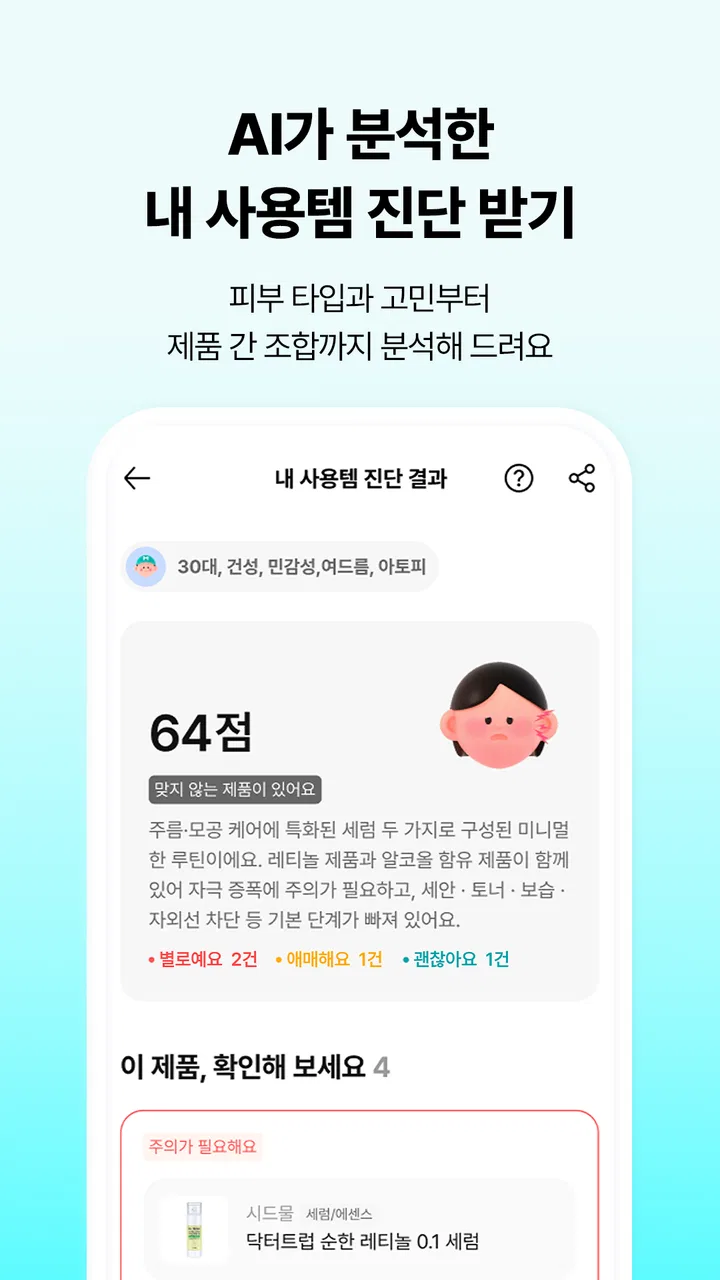
Ingredient-focused browsing is valuable because it gives me a more concrete way to compare products than marketing claims alone. I can look for ingredients I already know my skin tolerates and pay attention to combinations that may be relevant to my routine. This is especially helpful when a product name sounds similar to another one but the formulas are not actually alike.
However, I would not treat an ingredient list as a diagnosis or a guarantee. An ingredient can be useful in one formula and irritating in another context, and a person’s reaction cannot be predicted perfectly from a list. Hwahae can help me ask better questions, but it does not replace professional medical advice or a patch test.
One practical tip is to compare the full product page with recent user experiences rather than saving a product based on one ingredient alone. If I am considering a new active, I would introduce it separately from other changes. That makes it easier to understand what caused a reaction and prevents the app from encouraging an overly complicated routine.
What the community adds to the experience
User reviews are where the app becomes more grounded in everyday use. Brand descriptions tend to focus on intended benefits, while community posts can reveal details that matter after the bottle arrives: whether the pump is convenient, whether the product layers comfortably, or whether the finish works beneath foundation.
I find this especially useful for texture decisions. A person who dislikes sticky products may care more about absorption than a headline ingredient. Someone who wears makeup may care about rolling or pilling. Someone living in a humid environment may prefer a different finish from someone dealing with dry winter air. These distinctions are often more useful than a simple star score.
At the same time, community feedback can be subjective and uneven. One person’s “rich” may be another person’s “comforting,” and a positive result may reflect a routine that is completely different from mine. I would look for repeated patterns across several comments and give more attention to specific descriptions than to vague enthusiasm.
What you receive for free and where the value comes from
Hwahae is free to use, so the basic decision is not whether the app’s purchase price is justified. The value question is whether the time saved during product research is worth adding another beauty app to my phone. For me, the answer is yes when I am comparing unfamiliar K-beauty products, because the combination of rankings, product details, and user discussion is more convenient than collecting information from separate store pages.
The free model also makes it easier to use Hwahae before committing to a purchase elsewhere. I can research a product, compare alternatives, and decide whether the formula appears suitable without paying for access to the research step. That is a meaningful advantage for cautious shoppers who would rather avoid buying several products just to discover that one feels uncomfortable.
I would be careful about confusing free access with guaranteed savings. The app can improve the decision process, but it does not turn every popular product into a good value. A lower-priced product may still be the better choice if it meets my needs, while an expensive product may not justify its cost simply because it ranks well. The app helps evaluate options; it does not remove the need to consider the price of the products themselves.
Its scale is another part of the practical value. Hwahae has passed five million installs and holds an average rating of 4.3 from around forty-three thousand ratings. Those figures suggest that many people find the service useful, although they should not be read as proof that every review is equally detailed or that every recommendation will suit every skin type.
Where it beats ordinary shopping searches
A normal retailer search is efficient when I already know exactly what I want and simply need to check availability. Hwahae is stronger earlier in the process, when I am unsure which product deserves attention. It gives me a beauty-specific context instead of making me sort through broad marketplace results that may prioritize sales, sponsored placement, or convenience.
It also feels more useful than relying only on social media recommendations. Social posts can show texture and application beautifully, but they often reflect a single person’s routine and preferences. Hwahae’s product-centered structure makes comparison easier, particularly when I want to inspect several candidates without losing track of what each one is meant to do.
That does not mean I would abandon retailers or brand pages. I would still use those sources to confirm availability, packaging, instructions, and the final purchase terms. Hwahae is best as the research layer between curiosity and checkout, not necessarily as the only place I consult.
A realistic everyday example
Imagine I am nearly out of moisturizer and want something that will sit comfortably under sunscreen. I could open Hwahae during a lunch break, search the moisturizer category, and shortlist products that appear relevant. Instead of choosing the first result, I would compare textures described by users, inspect the ingredient information, and look for comments from people who mention makeup or daytime use.
If several users praise hydration but also mention a heavy finish, I would know that the product may be better for nighttime use. If another option receives less excitement but repeatedly gets described as easy to layer, it may be the smarter purchase for my routine. This is the kind of decision support I value: not a command to buy, but enough context to avoid an obvious mismatch.
After choosing a candidate, I would save the product details and revisit them after checking the seller’s current price and availability elsewhere. That final step matters because a beauty app can help me decide what to buy without necessarily being the best place to complete the transaction.
Limitations I noticed during use
The biggest limitation is that popularity can become a shortcut. A ranking is visually persuasive, and it is easy to assume that a highly placed product is automatically superior. I had to remind myself that rankings summarize community interest or preference, not my own skin history.
Another friction point is the amount of interpretation required. The app can put useful information in front of me, but I still need to distinguish a detailed review from a quick reaction, separate a temporary first impression from long-term use, and recognize when someone’s routine makes their result impossible to compare directly with mine.
Language and cultural context may also affect comfort for some users. Hwahae is strongly connected to Korean beauty discovery, so people who want a broad international catalog or a shopping experience centered on local stores may find a general retailer more convenient. The app’s focus is a strength for K-beauty fans, but it can feel narrower if my interests extend far beyond that space.
I would also avoid using it as a substitute for medical guidance. Persistent acne, eczema, sudden irritation, or suspected allergies require a qualified professional. Product rankings and community comments can support ordinary shopping decisions, but they cannot determine what condition I have or what treatment I need.
Who will get the most from it
Hwahae is a strong fit for someone who enjoys researching skincare before purchasing. It is particularly helpful if I am new to Korean beauty and feel overwhelmed by similar-looking products, or if I want to compare formulas without opening many unrelated pages. People who care about ingredients, textures, and real-world application details will probably find more value than casual shoppers who buy the same familiar items repeatedly.
It is also useful for routine builders who want to make one change at a time. I can investigate a product, read about how people use it, and decide whether it fills a genuine gap rather than adding another attractive bottle to an already crowded shelf. That makes the app helpful for reducing impulsive purchases, even though the abundance of products can also encourage browsing for its own sake.
I would recommend skipping it if I only need a fast reorder, dislike reading user opinions, or want a highly personalized clinical recommendation. In those situations, a trusted retailer, a brand’s official instructions, or a consultation with a professional may be more efficient. The app rewards curiosity and comparison; it is less compelling when I already know exactly what works for me.
Practical tips for getting better results
Search by the problem or product type you are trying to solve, then compare several candidates instead of choosing the first ranking position.
Read comments for texture, layering, scent, and finish, because these details often determine satisfaction more than a broad claim about hydration or glow.
Look for repeated experiences rather than treating one dramatic review as conclusive evidence.
Introduce only one unfamiliar product at a time so that a reaction or improvement is easier to associate with the right change.
Use Hwahae for discovery and comparison, then verify the final seller, price, and product instructions before purchasing.
My final recommendation
After using Hwahae as a beauty research companion, I think its free access delivers real value for people who want more context before buying K-beauty products. The app’s combination of rankings, ingredient information, and community experience gives me a more balanced starting point than a retailer page or a single influencer recommendation. Its long presence in the beauty space and broad adoption also make it feel like a substantial catalog rather than a temporary trend.
My recommendation comes with a clear condition: use it to investigate, not to outsource your judgment. Rankings can narrow the field, reviews can reveal practical strengths and weaknesses, and ingredient information can support smarter comparisons. None of those elements guarantees that a product will suit my skin.
For a careful shopper choosing between unfamiliar cleansers, serums, moisturizers, or makeup products, I would install it. For someone seeking medical advice, instant reorders, or a completely international shopping marketplace, I would choose a different tool. Overall, Hwahae is most valuable when the decision is uncertain and I want evidence from several angles before spending money.
The app is rated for Everyone, and its free entry point makes trying that research workflow low-risk. With around one hundred six written reviews shown alongside its broader rating activity, I would focus less on the headline score and more on the quality and relevance of the individual experiences I read. That is ultimately how I would use Hwahae: as a thoughtful filter between beauty marketing and my own final decision.
FAQs for Hwahae(Korea’s Beauty APP)
01What is Hwahae and how does it work?
Hwahae is a popular Korean beauty app designed to help users discover and review skincare and cosmetic products. It provides detailed ingredient lists, user reviews, and ratings to help you make informed decisions. You can search for products by brand or category, and even track your skincare routine. The app's user-friendly interface makes it easy to navigate and find the information you need.
02Is Hwahae available in languages other than Korean?
Currently, Hwahae is primarily available in Korean, which may pose a challenge for non-Korean speakers. However, some users have found success using translation apps to navigate the interface. The app’s popularity and comprehensive database make it a valuable resource for anyone interested in K-beauty, even if you need a bit of translation assistance.
03How reliable are the product reviews on Hwahae?
The reviews on Hwahae are submitted by real users, providing a wide range of experiences and opinions. Each product features a detailed breakdown of ingredients and user ratings. While reviews are generally reliable, it’s important to consider multiple reviews to get a balanced perspective. The app also highlights products with the highest ratings, making it easier to find popular items.
04Does Hwahae offer personalized recommendations?
Yes, Hwahae offers personalized product recommendations based on your skin type and concerns. By inputting your skin profile, the app can suggest products that might suit your needs. This feature helps streamline the process of finding suitable skincare and cosmetic items, making it particularly helpful for those new to K-beauty.
05Is Hwahae free to use, and does it offer in-app purchases?
Hwahae is free to download and use, providing access to a vast database of beauty products and reviews. There are no compulsory in-app purchases, but some features or premium services might require payment. It’s advisable to check the app’s description and user settings to understand any potential costs before using premium features.
Pros
- Comprehensive product database.
- User-friendly interface.
- Detailed ingredient analysis.
- Personalized skincare recommendations.
- Active user community for reviews.
Cons
- Limited availability outside Korea.
- Language barrier for non-Korean speakers.
- Occasional app glitches reported.
- Requires internet for full functionality.
- Limited options for non-Korean brands.

Hwahae(Korea’s Beauty APP)
Gallery